TrendLens
The B2B Bridge: Translating Visual Intuition
into Merchant Action
TYPE
Concept Project
ROLE
Solo Product Designer
FOCUS
Systems Architecture
PLATFORM
B2B Enterprise Web
TrendLens
The B2B Bridge: Translating Visual Intuition
into Merchant Action
TYPE
Concept Project
ROLE
Solo Product Designer
FOCUS
Systems Architecture
PLATFORM
B2B Enterprise Web
TrendLens
The B2B Bridge: Translating Visual Intuition
into Merchant Action
TYPE
Concept Project
ROLE
Solo Product Designer
FOCUS
Systems Architecture
PLATFORM
B2B Enterprise Web
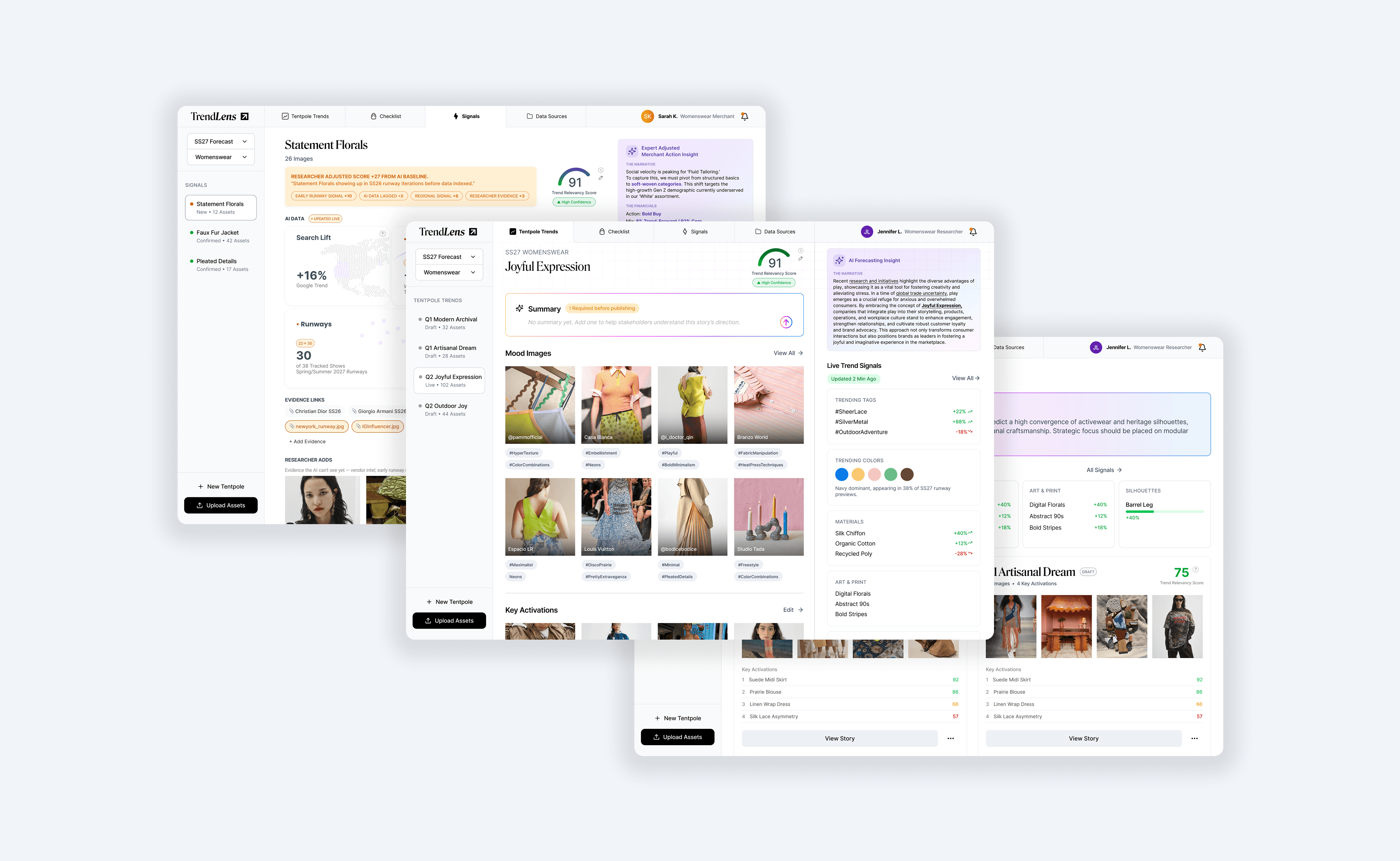
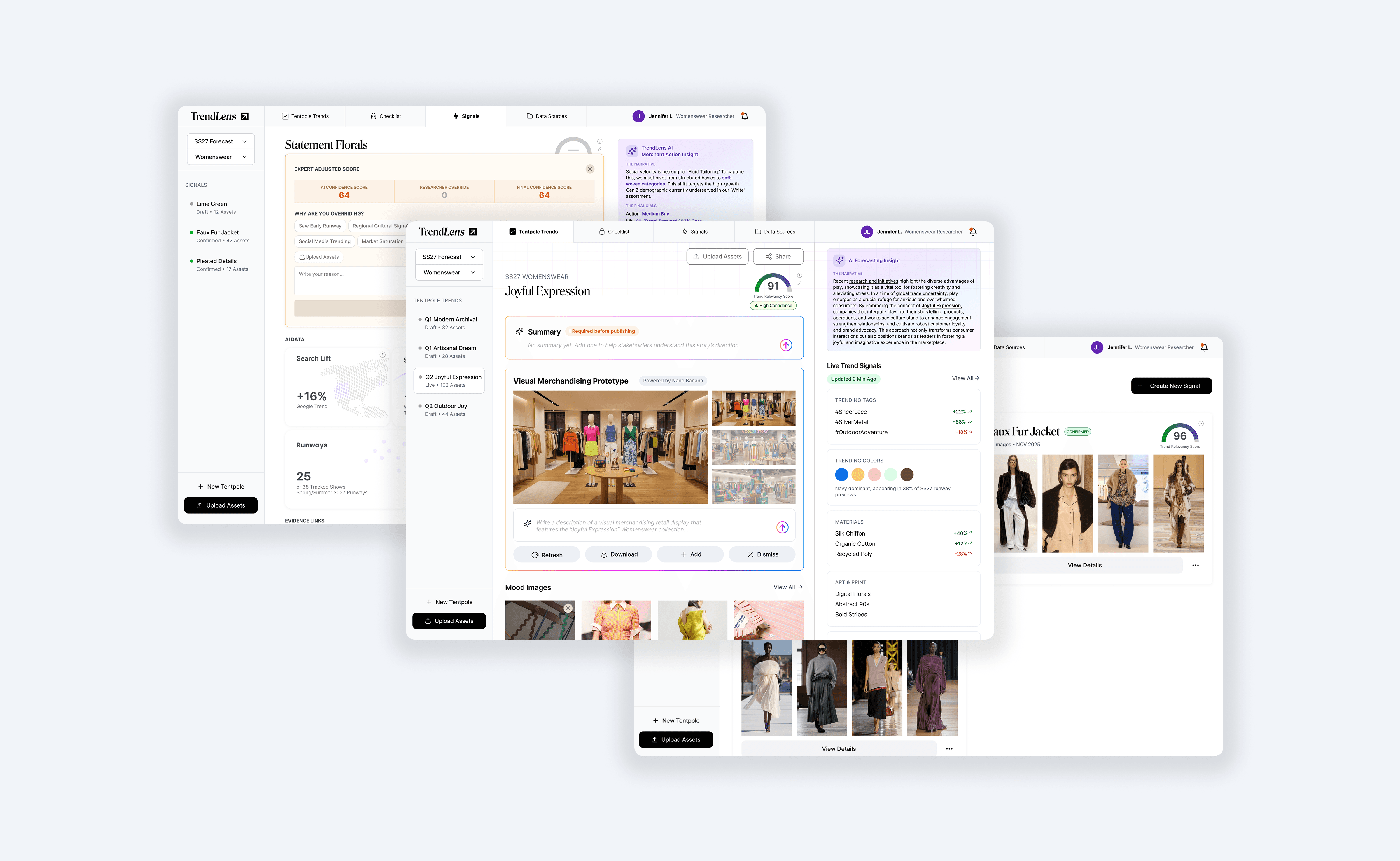
In enterprise retail, a "translation gap" exists between Trend Teams who identify visual shifts and Merchant Teams who manage financial risk. Trend data lives in static PDFs. Buying decisions run on gut feeling. Revenue gets left on the table.
TrendLens is a concept project built from 8 years of direct enterprise retail experience. The system is fully designed and prototype-tested. A controlled pilot is the proposed next step.
The goal: design an AI-augmented workspace that converts qualitative trend inspiration into quantitative Trend Relevancy Scores. Buyers can act with confidence, and Researchers can prove their instincts were right.
In enterprise retail, a "translation gap" exists between Trend Teams who identify visual shifts and Merchant Teams who manage financial risk. Trend data lives in static PDFs. Buying decisions run on gut feeling. Revenue gets left on the table.
TrendLens is a concept project built from 8 years of direct enterprise retail experience. The system is fully designed and prototype-tested. A controlled pilot is the proposed next step.
The goal: design an AI-augmented workspace that converts qualitative trend inspiration into quantitative Trend Relevancy Scores. Buyers can act with confidence, and Researchers can prove their instincts were right.
01 PROBLEM
The "Vibe" vs. The "Volume"
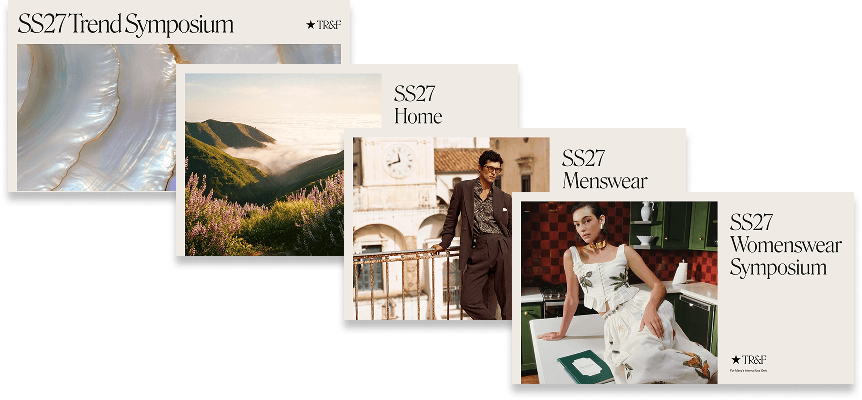
Through 8 years in the industry, I observed a recurring friction point that no one had formally named: the Translation Gap. Two highly skilled teams—Trend Research and Merchant Buying—were operating with entirely different definitions of evidence.
"There is a fundamental gap between our teams. Researchers operate on visual intuition, while Merchants require data. We must translate abstract 'vibe' signals into quantifiable business intelligence."
- Trend Researcher
"Merchants receive a trend story but revert to historical best-sellers for safety. They'll categorize white briefs under a 'White Tentpole' just because they sold well every year, even if it has zero relevance to the actual trend. It's a false match."
- Merchant SVP
PERSONAL A • CREATIVE
The Trend Lead
PERSONAL A • CREATIVE
The Trend Lead
Processes 10,000+ images per season with zero AI assistance
Sorts manually into folders (No tagging, manual cross-season referencing)
Creative synthesis happens after weeks of sorting
Speaks in aesthetic language: "soft volume," "tactile minimalism"
Has the vision but speaks in visual
Delivers: Static PDF trend reports built from folder exports
Gap
No Shared
Language
Gap
PERSONA B · ANALYTICAL
The Buyer Lead
PERSONA B · ANALYTICAL
The Buyer Lead
Manages $M+ open-to-buy per season
Speaks in financial language: sellthrough, AUR, comp performance
Has the budget but lacks the ability to "see" a trend before it lands
Defaults to historical data, skewing assortments conservatively
Needs: A "WHY" backed by signal, not sentiment
Manages $M+ open-to-buy per season
Speaks in financial language: sellthrough, AUR, comp performance
Has the budget but lacks the ability to "see" a trend before it lands
Defaults to historical data, skewing assortments conservatively
Needs: A "WHY" backed by signal, not sentiment
02 THE STRATEGY
Systems Over Assets
The real opportunity was to design the connective tissue between two teams: a Translation Engine.
Instead of asking "How do we present trends more beautifully?", I asked: "How do we make trend data drive buying decisions?"
The real opportunity was to design the connective tissue between two teams: a Translation Engine.
Instead of asking "How do we present trends more beautifully?", I asked: "How do we make trend data drive buying decisions?"
This meant designing for two distinct mental models simultaneously. One for a creative flow state for the Trend Lead, and one for a data-driven Merchant, without compromising either experience.
This meant designing for two distinct mental models simultaneously. One for a creative flow state for the Trend Lead, and one for a data-driven Merchant, without compromising either experience.
FOR THE CREATIVE
TREND LEAD
FOR THE CREATIVE
TREND LEAD
SOLUTION A
SOLUTION A
The Smart Canvas
An AI-integrated workspace that reduces the manual labor of tagging and organizing visual data. The goal is to let the machine handle taxonomy so the researcher can focus on curation.
An AI-integrated workspace that reduces the manual labor of tagging and organizing visual data. The goal is to let the machine handle taxonomy so the researcher can focus on curation.
FOR THE ANALYTICAL
SENIOR MERCHANT
FOR THE ANALYTICAL
SENIOR MERCHANT
SOLUTION B
SOLUTION B
The Decision Dashboard
The Decision Dashboard
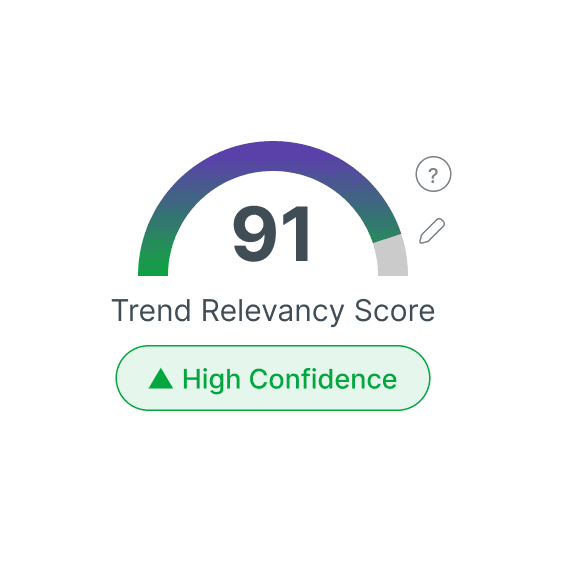
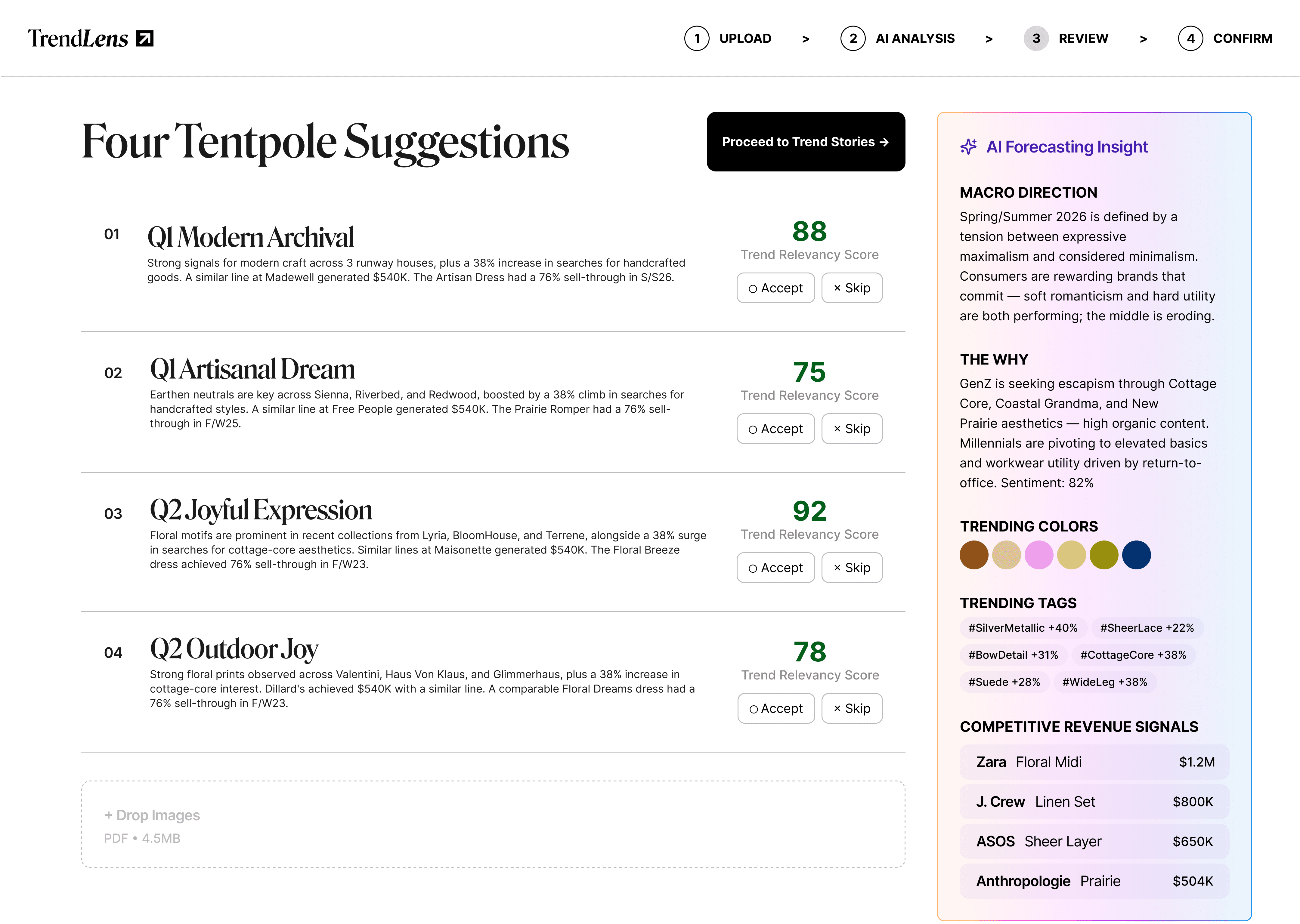
A data-backed "why" surface that translates qualitative trend signals into the Trend Relevancy Score (TRS), which is a weighted metric the Buyer can defend in a financial review. Confidence without losing nuance.
A data-backed "why" surface that translates qualitative trend signals into the Trend Relevancy Score (TRS), which is a weighted metric the Buyer can defend in a financial review. Confidence without losing nuance.
03 SYSTEM ARCHITECTURE
Two Flows, One Translation Engine
Two Flows, One Translation Engine
TrendLens has two distinct workflows solving different versions of the same problem.
Tentpole Trends handles seasonal architecture: months out, batch processing, strategic.
Signals handles real-time reaction: days out, fast-moving micro-trends, tactical.
Both feed into the same Translation Engine that converts creative intuition into merchant-ready buying intelligence.
TrendLens has two distinct workflows solving different versions of the same problem.
Tentpole Trends handles seasonal architecture: months out, batch processing, strategic.
Signals handles real-time reaction: days out, fast-moving micro-trends, tactical.
Both feed into the same Translation Engine that converts creative intuition into merchant-ready buying intelligence.
FLOW 1 • SEASONAL
FLOW 1 • SEASONAL
Tentpole Trends
Tentpole Trends
Months Out
Months Out
For Seasonal Architecture
For Seasonal Architecture

FLOW 2 • REAL TIME
FLOW 2 • REAL TIME
Signals
Signals
Days/Weeks Out
Days/Weeks Out
For Real-Time Reaction
For Real-Time Reaction

04 THE PRODUCT
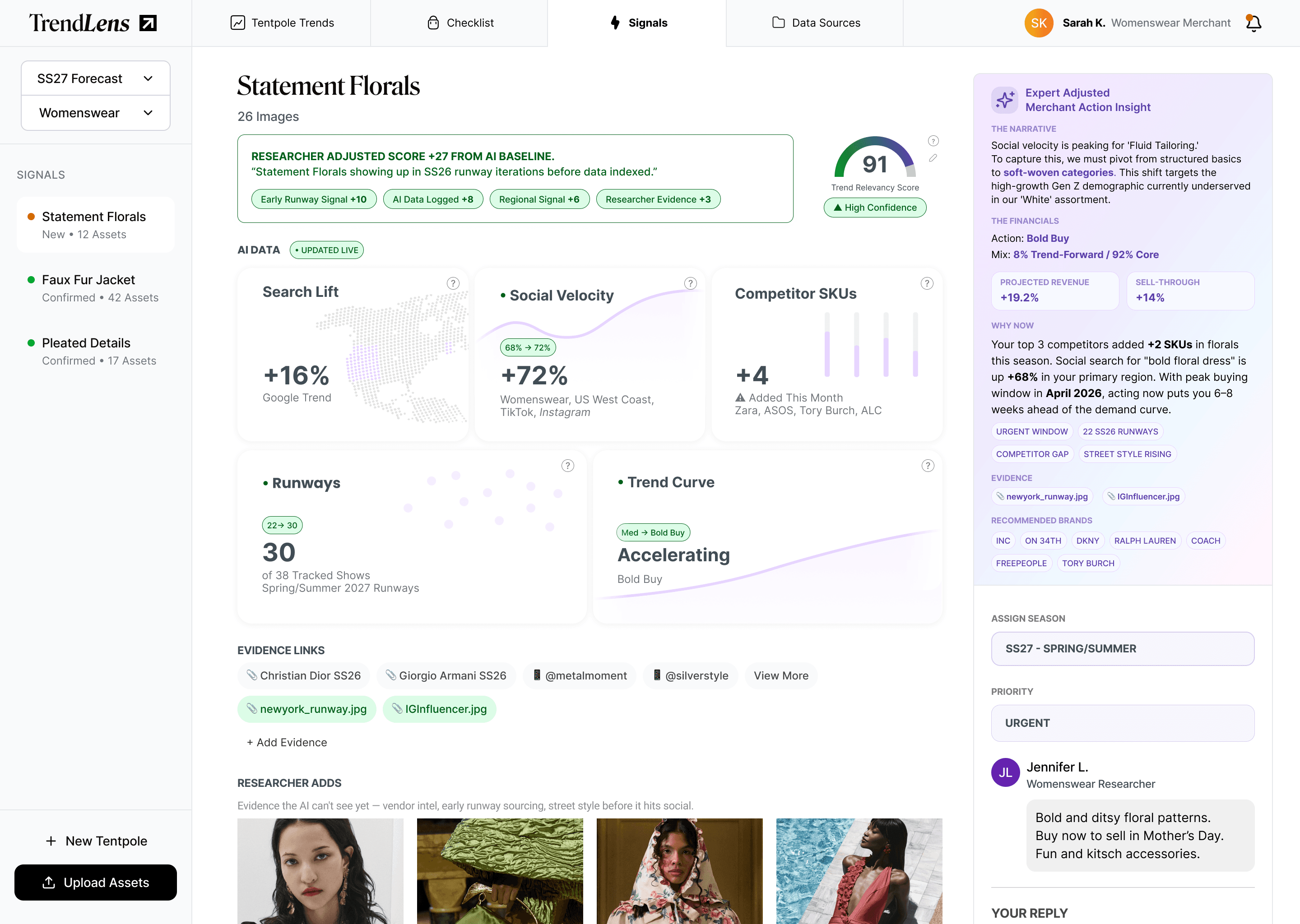
This is what the Merchant receives after the Researcher publishes. Here's how it gets built.
This is what the Merchant receives after the Researcher publishes. Here's how it gets built.
TrendLens has two surfaces.
The Researcher builds the trend story.
The Merchant receives it with everything needed to act.
TrendLens has two surfaces.
The Researcher builds the trend story.
The Merchant receives it with everything needed to act.
Merchant Decision Dashboard
MERCHANT VIEW
MERCHANT VIEW
05 THE DESIGN SOLUTION
Quantifying Trend Relevancy Score
Quantifying Trend Relevancy Score
Social Velocity
Content Momentum
TikTok/IG posts and shares
Weighted highest for fast-react signals. Social data moves 4-6 weeks ahead of sales floor evidence.
Social Velocity
Content Momentum
TikTok/IG posts and shares
Weighted highest for fast-react signals. Social data moves 4-6 weeks ahead of sales floor evidence.
Competitor Sell-Through
Comparable SKUs at competitor retail brands
The strongest commercial proof point. If a competitor is selling through, the demand is real and the window is closing.
Competitor Sell-Through
Comparable SKUs at competitor retail brands
The strongest commercial proof point. If a competitor is selling through, the demand is real and the window is closing.
Runway Signal
Frequency across tracked shows
Weighted for seasonal tentpole trends. High runway frequency predicts 6-12 month commercial relevance.
Runway Signal
Frequency across tracked shows
Weighted for seasonal tentpole trends. High runway frequency predicts 6-12 month commercial relevance.
Historical Performance
Past sell-through on comparable items
The Buyer's anchor. Included to contextualize new trends against what the organization already knows how to sell.
Historical Performance
Past sell-through on comparable items
The Buyer's anchor. Included to contextualize new trends against what the organization already knows how to sell.
Consumer Demand Index
Google search + shopping platform saves
Early-intent signal. Captures consumer curiosity before it converts to purchase. This is useful for emerging trends with low sell-through history.
Consumer Demand Index
Google search + shopping platform saves
Early-intent signal. Captures consumer curiosity before it converts to purchase. This is useful for emerging trends with low sell-through history.
06 THE DESIGN SYSTEM
Why This Pairing?
Why This Pairing?
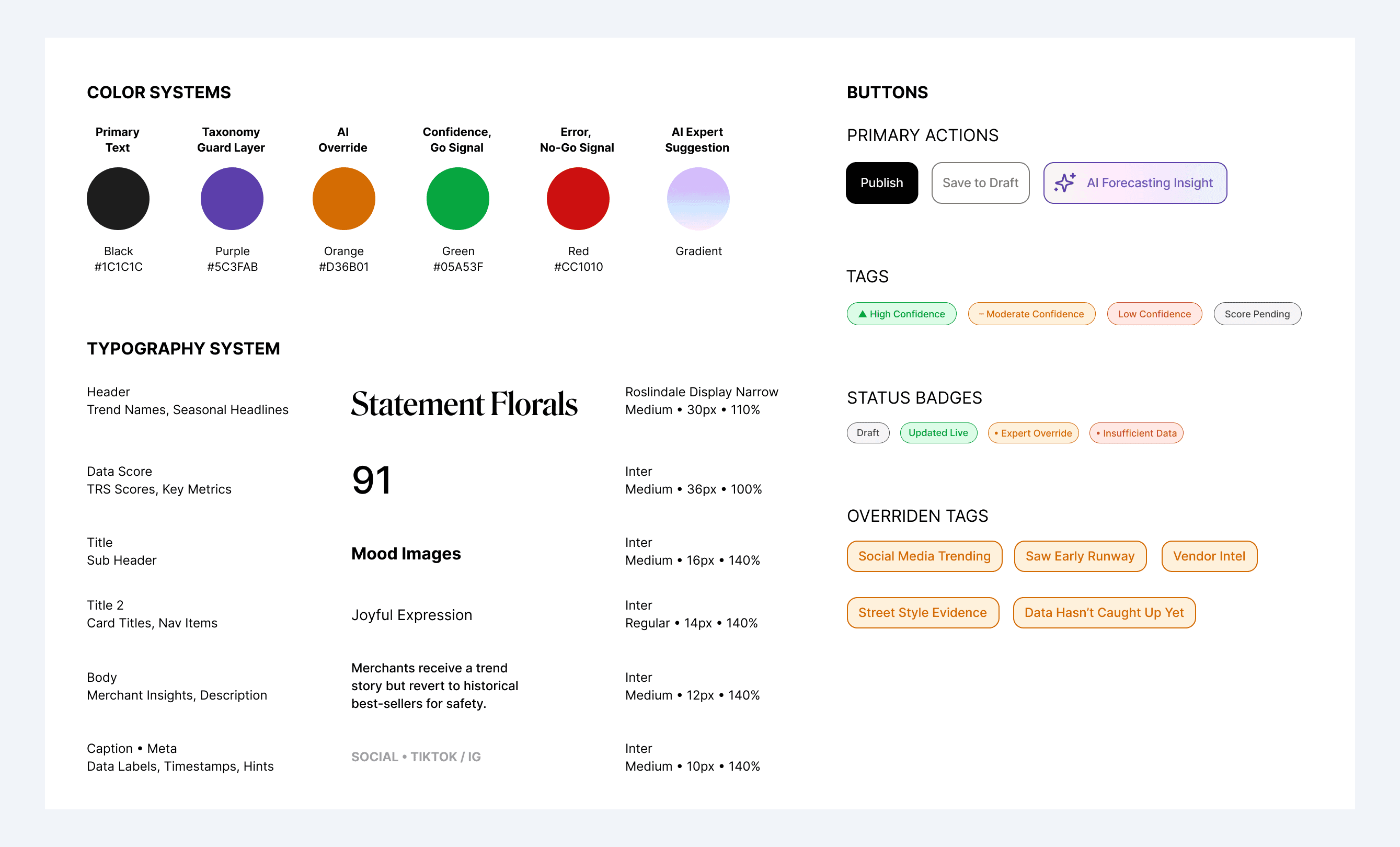
Roslindale Display Narrow carries editorial authority.
Inter handles everything requiring clarity: scores, labels, data, timestamps.
Neither typeface competes for attention. Roslindale sets the voice. Inter carries the information. Together they create the tension between editorial and analytical that defines TrendLens as a platform — it's not a dashboard, and it's not a mood board. It's both.
Roslindale Display Narrow carries editorial authority.
Inter handles everything requiring clarity: scores, labels, data, timestamps.
Neither typeface competes for attention. Roslindale sets the voice. Inter carries the information. Together they create the tension between editorial and analytical that defines TrendLens as a platform — it's not a dashboard, and it's not a mood board. It's both.
07 PROTOTYPE
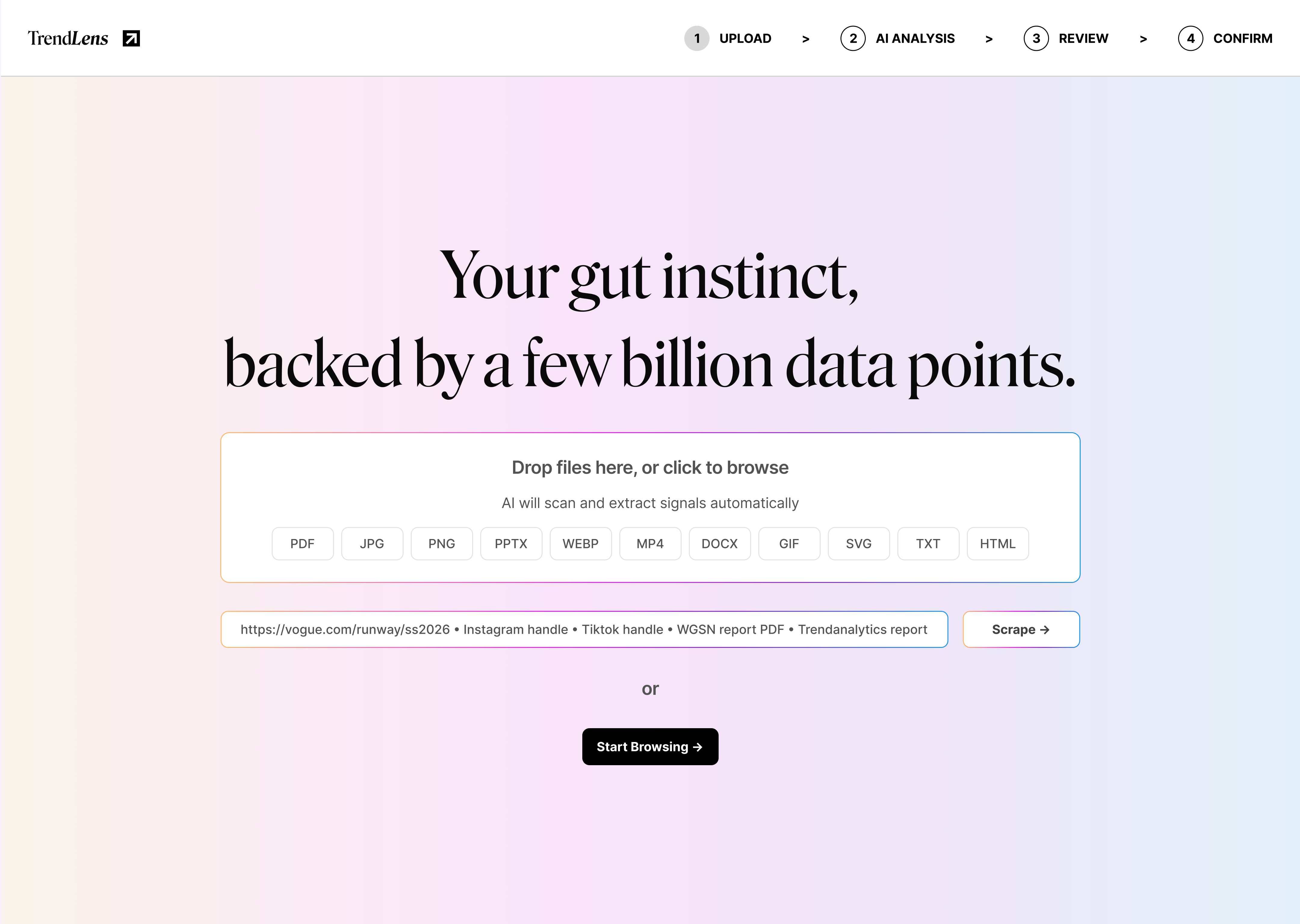
TrendLens has two complete flows. Both start with the Researcher and end with the Merchant.
TrendLens has two complete flows. Both start with the Researcher and end with the Merchant.
Flow 1 Researcher -> Smart Canvas
Step 1 • Upload Research Assets
RESEARCHER VIEW
RESEARCHER VIEW
Step 2 • AI proposes 4 tentpoles, researcher accepts or skips
RESEARCHER VIEW
RESEARCHER VIEW
Step 3 • All 4 Tentpoles With Live Signals
RESEARCHER VIEW
RESEARCHER VIEW
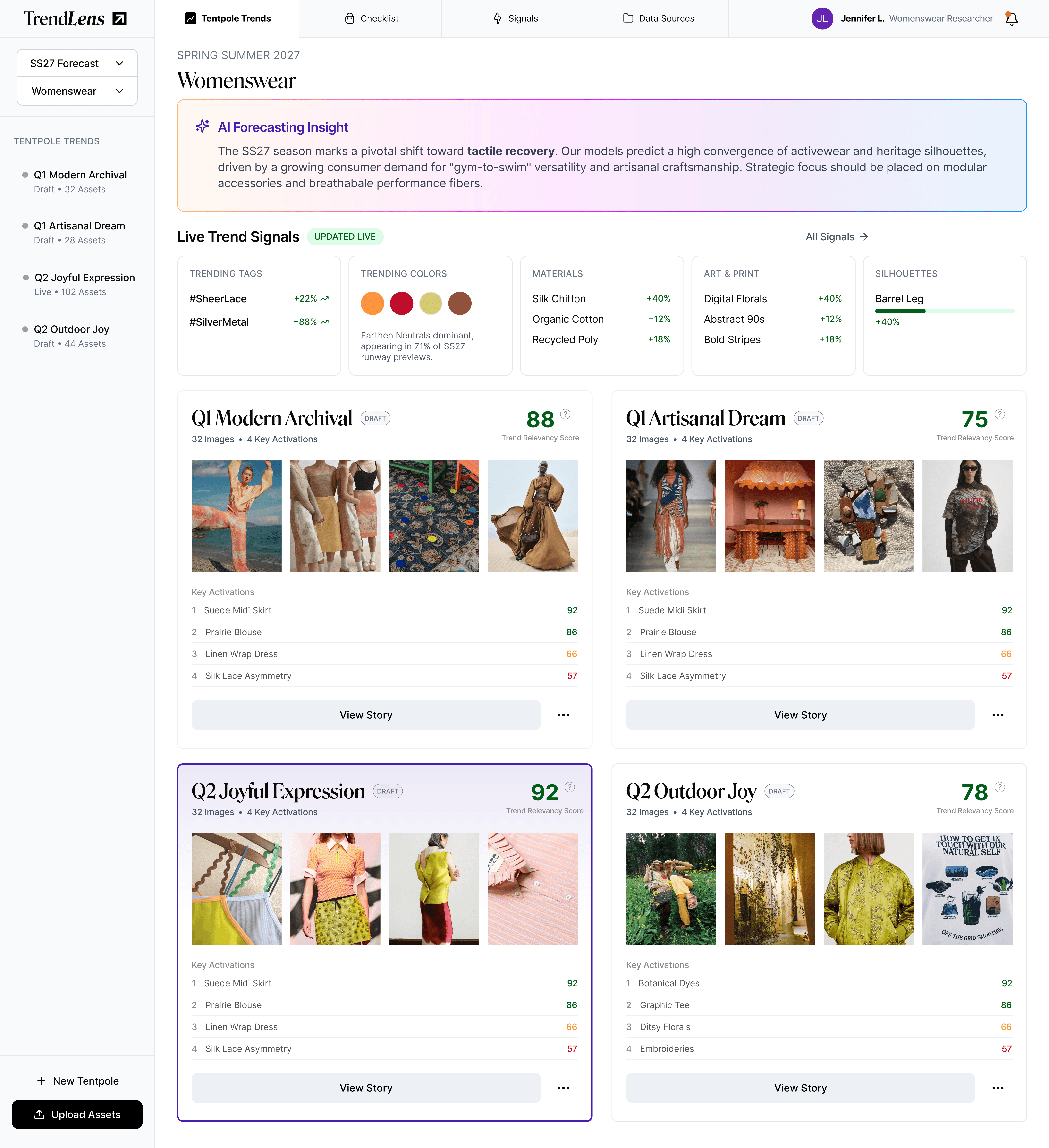
Step 4 • Tentpole Trend Screen
RESEARCHER VIEW
RESEARCHER VIEW

Flow 2 Researcher -> Creates Signal -> Merchant
Step 1 • Researcher Creates A New Signal
RESEARCHER VIEW
RESEARCHER VIEW
Step 2 • Researcher Expert Adjusts Score
RESEARCHER VIEW
RESEARCHER VIEW
Step 3 • Researcher Sends To Merchant
RESEARCHER VIEW
RESEARCHER VIEW
The Override above is what the Researcher experiences. The Decision Dashboard below is what the Buyer receives. Same data. Two surfaces. One shared language.
The Override above is what the Researcher experiences. The Decision Dashboard below is what the Buyer receives. Same data. Two surfaces. One shared language.
Step 4 • Merchant Receives New Signal
MERCHANT VIEW
MERCHANT VIEW
The Merchant has everything needed to act. No follow-up meeting required.
The Merchant has everything needed to act. No follow-up meeting required.
08 EDGE CASES
Designing For Failure States
Designing For Failure States
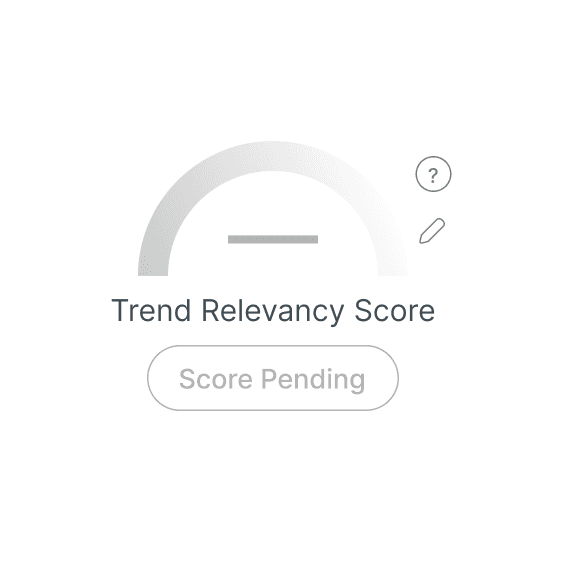
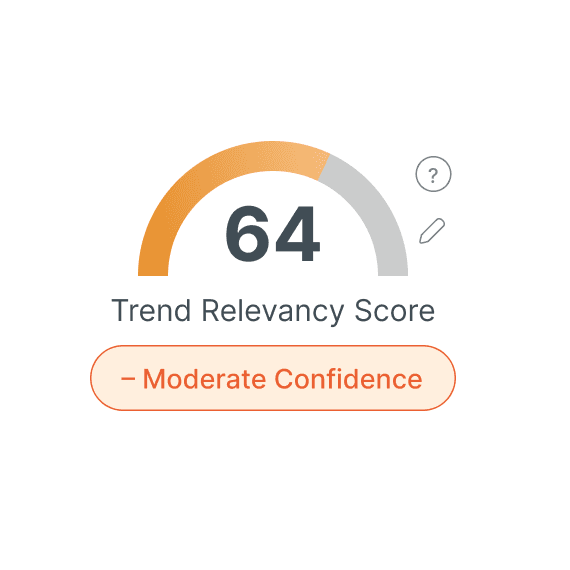
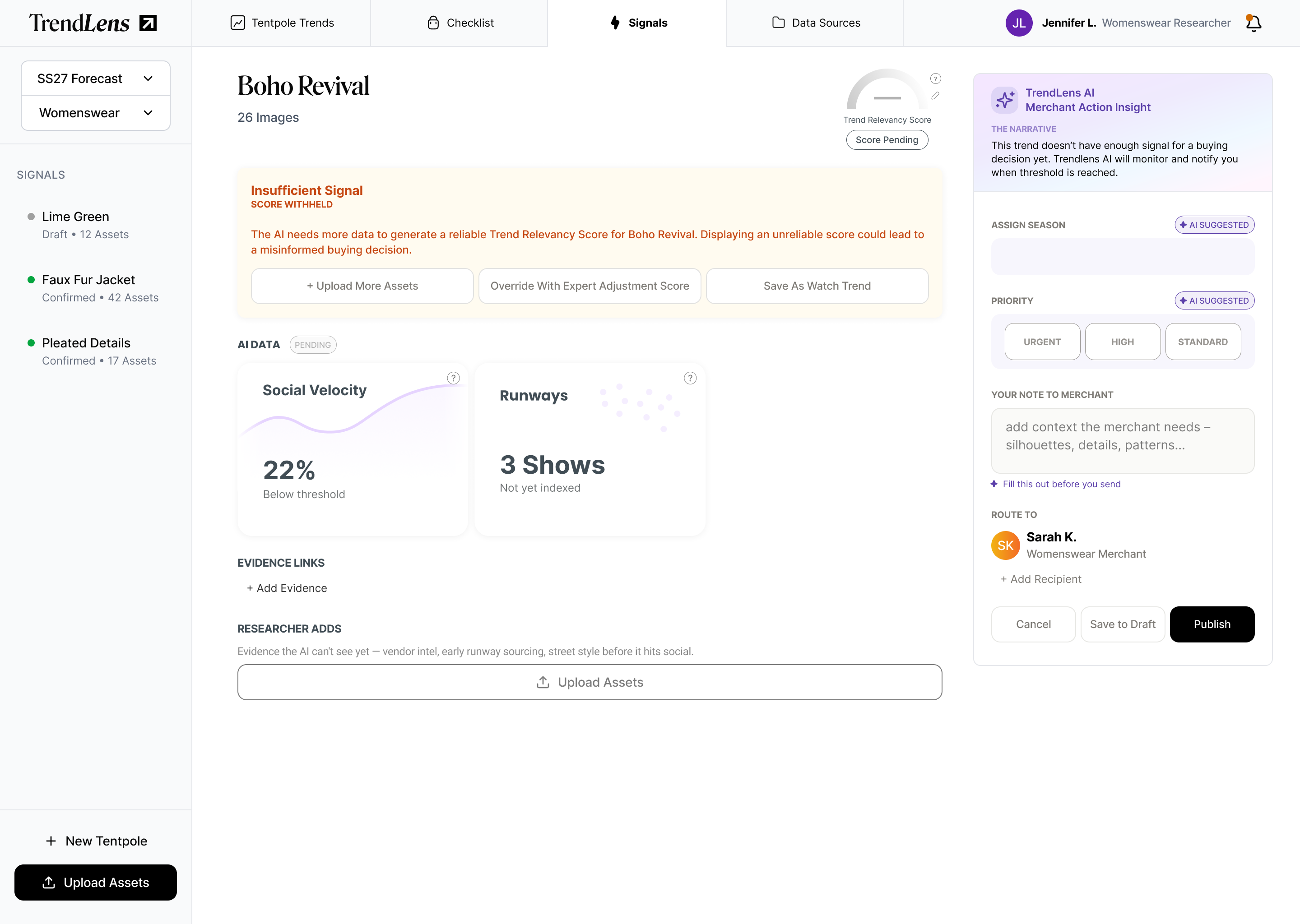
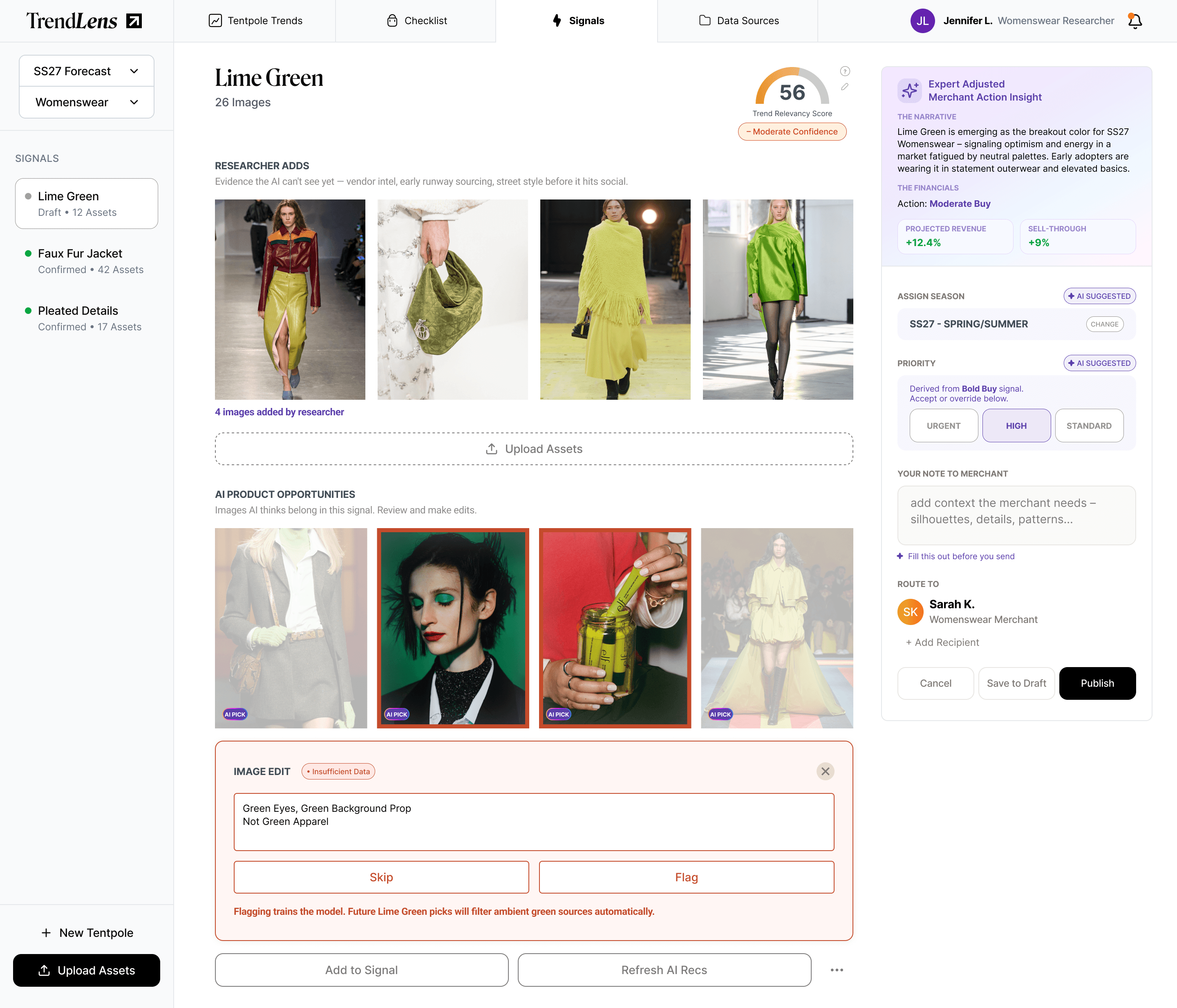
Every edge case below came directly from user testing. Each concern became a designed system state, not just an error message. The question was never whether the AI would be wrong. It was: when it's wrong, does the system give the expert a path forward?
Every edge case below came directly from user testing. Each concern became a designed system state, not just an error message. The question was never whether the AI would be wrong. It was: when it's wrong, does the system give the expert a path forward?
Insufficient Signal • Score Withheld
AI Tagging Error • Wrong Tags, Insufficient Data
09 REFLECTION
What Success Looks Like
These are hypotheses, not guarantees. Each one is directly traceable to a specific design decision. A three-season controlled pilot with one retail organization would confirm or challenge all of them.
These are hypotheses, not guarantees. Each one is directly traceable to a specific design decision. A three-season controlled pilot with one retail organization would confirm or challenge all of them.
Outcome
Outcome
Hypothesis
Hypothesis
Design Decision Behind It
Design Decision Behind It
Faster Trend-To-Buy Cycle
Weeks reduced to days for reactive signals
Weeks reduced to days for reactive signals
Signals Flow
Pre-written merchant brief ships with every publication
Signals Flow
Pre-written merchant brief ships with every publication
Reduced Ghost Inventory
Buying aligned to actual market signal, not historical defaults
Buying aligned to actual market signal, not historical defaults
TRS replaces gut-feel with auditable, weighted evidence
TRS replaces gut-feel with auditable, weighted evidence
Cross-Team Alignment From Day One
Researchers and Buyers working in the same system, not sequential handoffs
Researchers and Buyers working in the same system, not sequential handoffs
Shared canvas
Both personas see the same data, different views
Shared canvas
Both personas see the same data, different views
Institutional Memory
Override decisions logged, tagged, and linked to sell-through outcomes over time
Override decisions logged, tagged, and linked to sell-through outcomes over time
Structured override rationale Searchable across seasons
Structured override rationale Searchable across seasons
Pilot Success Metrics
Seasonal prep time recovered per team
AI tagging accuracy rate at Season 1 vs Season 3
Override-to-outcome correlation – whose expert reads were commercially predictive
Seasonal prep time recovered per team
AI tagging accuracy rate at Season 1 vs Season 3
Override-to-outcome correlation – whose expert reads were commercially predictive
What I Learned & What's Next…
The most important work on this project happened before any pixels were drawn — in the research phase, when I realized the problem wasn't aesthetic. Buyers don't distrust trend teams. They don't understand the why behind them. That reframe changed everything about the solution.
What I got right: designing for two mental models simultaneously without compromising either. The Smart Canvas preserves the researcher's creative flow. The Decision Dashboard gives the buyer something they can defend in a financial review. Keeping those two surfaces distinct was the right call.
What I'd do differently: the research sample was small and industry-adjacent, not enterprise-validated. If I were to continue this project, the next step is a structured pilot with one retail organization over three seasons by measuring actual meeting reduction, trend capture speed, and the trust curve of the AI scoring system over time. The hypotheses are formed. The system is designed to test them. That's the difference between a concept and a strategy.
The most important work on this project happened before any pixels were drawn — in the research phase, when I realized the problem wasn't aesthetic. Buyers don't distrust trend teams. They don't understand the why behind them. That reframe changed everything about the solution.
What I got right: designing for two mental models simultaneously without compromising either. The Smart Canvas preserves the researcher's creative flow. The Decision Dashboard gives the buyer something they can defend in a financial review. Keeping those two surfaces distinct was the right call.
What I'd do differently: the research sample was small and industry-adjacent, not enterprise-validated. If I were to continue this project, the next step is a structured pilot with one retail organization over three seasons by measuring actual meeting reduction, trend capture speed, and the trust curve of the AI scoring system over time. The hypotheses are formed. The system is designed to test them. That's the difference between a concept and a strategy.
Cynthia Rhee
©
2026